


by Munyengabo Dushime
Abstract
Africa’s post-independence condition is routinely framed as a failure of governance, leadership, or capacity. This essay advances a sharper thesis: Africa did not fail independence; it never completed it. Drawing on the Exodus narrative of Israel’s 40 years in the wilderness, and supported by post-colonial theory and political economy, I argue that freedom requires a structured interval of internal transformation. Africa entered sovereignty without such a phase. What is often diagnosed as “lag” is better understood as unfinished nationhood.
1 : When Distance Is Not the Constraint
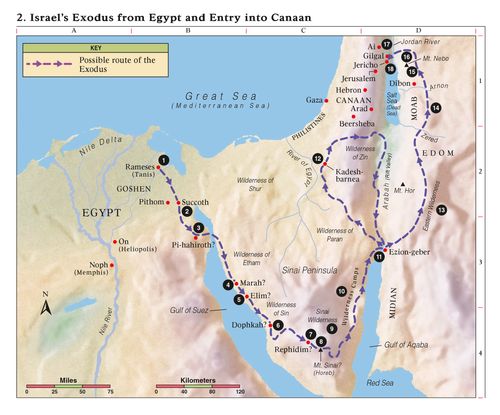
The biblical account of Israel’s journey from Egypt to Canaan is explicit: the distance was short. The delay was deliberate. A population shaped by bondage could not immediately sustain freedom.
The wilderness was not a logistical detour; it was a transformational necessity. Law, identity, leadership, and responsibility had to be forged in a vacuum before territory could be possessed.
Africa’s independence moment echoes this paradox. Political sovereignty arrived abruptly, but the internal architecture required to govern freedom—institutions, economic logic, and psychological orientation—remained largely colonial in design.
Africa crossed the border of independence. It did not redesign what crossed with it.
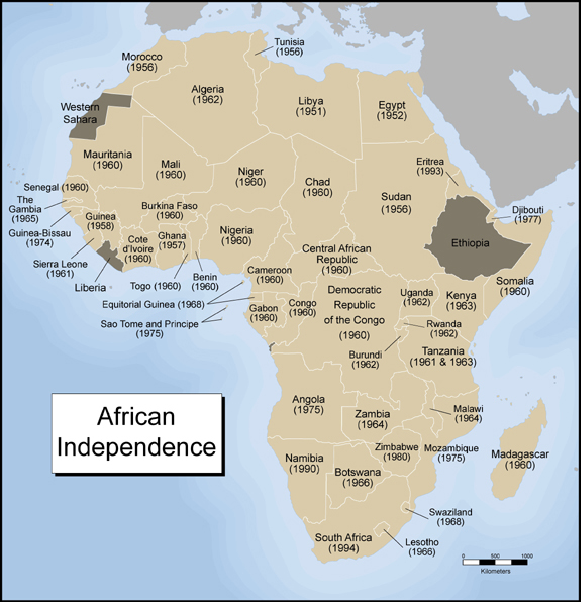
2: Independence as Acceleration, Not Completion
Colonial states in Africa were built for extraction, control, and administrative order—not for development or self-rule. At independence, most African governments inherited a “Trojan Horse” of governance:
- Administrative systems optimized for command, not service.
- Economies structured purely around raw-material export.
- Borders and institutions disconnected from organic social cohesion.
As Frantz Fanon warned in The Wretched of the Earth, the post-colonial elite often replaced the colonizer without dismantling the colonial state itself. Independence became a transfer of control, not a transformation of logic.
This was not incompetence; it was historical compression. Africa was asked to perform full sovereignty immediately, under Cold War pressure and global market exposure, without an insulated transition phase comparable to Israel’s wilderness.

3: Freedom and the Psychology of Bondage
In the wilderness narrative, the Israelites repeatedly long for Egypt—not because it was just, but because it was familiar. Bondage had shaped their expectations of authority, provision, and risk.
This aligns with modern psychology and political theory: domination produces durable internal effects. Paulo Freire described this as the internalization of the oppressor. Post-colonial Africa exhibits parallel patterns:
- Policy legitimacy is sought through external validation (Western capitals/Donors).
- Development models are imported rather than authored.
- Leadership accountability is oriented outward rather than downward.
Freedom removes external rulers. It does not automatically restore internal agency. A society cannot innovate at scale while doubting its own authority to define solutions.
4: The Missing Generational Reset
One of the most uncomfortable aspects of the Exodus story is generational: the slave generation does not enter Canaan. This is not a moral judgment; it is structural realism. A population shaped by survival under domination cannot simultaneously dismantle and replace it.
Africa largely skipped this reset.
Colonial-era elites frequently became post-colonial rulers. Administrative cultures persisted. Education systems continued to privilege colonial epistemologies. The same generation tasked with navigating empire was tasked with designing sovereignty. This placed an impossible burden on leadership and institutions alike.
5: Global Integration Without Internal Consolidation
Africa entered global markets immediately after independence, often under adverse conditions:
- Premature liberalization.
- Debt-led development frameworks.
- External policy conditionalities (IMF/World Bank).
Unlike Israel’s wilderness—which was insulated, inward-facing, and formative—Africa’s post-independence period was externally disciplined and economically exposed.
The result has been growth without transformation: GDP without industrial depth, states without productive sovereignty, and independence without insulation.
6: Why “Africa Is Behind” Is the Wrong Diagnosis
The claim that Africa is “behind” assumes a single, linear development timeline. That assumption is analytically weak.
Africa is not behind in time; it is out of sequence.
The Israelites were delayed by design. Africa was accelerated by history. Development is not speed. It is readiness.
7:Completing Independence: A Personal Thesis
Africa’s task is not to retreat from the world or romanticize the past. It is to complete what independence began. A contemporary “wilderness phase” would not mean isolation, but intentional sequencing:
- Psychological and epistemic decolonization.
- Institutional re-engineering toward production, not extraction.
- Regional integration before deep global exposure.
- Generational leadership transition.
- Strategic insulation of key sectors.
As political economist Ha-Joon Chang has shown in Kicking Away the Ladder, today’s developed nations protected and structured their economies before liberalizing. Africa was denied that sequence. This is not regression. It is delayed completion.
Conclusion
The Israelites did not wander because Canaan was distant. They wandered because freedom arrived before readiness.
Africa’s struggle reflects the same condition. Political independence removed external rulers, but internal architectures of domination remained intact. Until these are dismantled and replaced—psychologically, institutionally, and generationally—sovereignty will remain partial.
Africa is not late to development. It is still becoming free.
Final Provocation
If Africa were allowed by itself and by the global system to finish becoming sovereign before being judged by sovereign standards, would we still call it “behind,” or simply unfinished?